
Investor inquiries since the 2026 Budget
Since the rooming houses property 2026 budget, we have received calls, messages and emails from investors, predominantly asking one question.
How will the rooming houses property 2026 budget affect rooming houses?
The simple answer is that the rooming houses property 2026 budget strengthens professionally developed new rooming accommodation houses.
The gap between traditional residential property investing and professionally developed rooming accommodation has become even wider. For investors who understand cash flow, manufactured equity and long-term wealth creation, the fundamentals have never looked stronger.
The Old Investment Model Has Changed
For decades, many Australians purchased established investment properties knowing they would lose money every year.
Negative cash flow became accepted as “normal.” Investors willingly paid thousands of dollars out of their own pocket every year hoping future capital growth would eventually compensate for years of ongoing losses.
The strategy relied heavily on three assumptions:
- negative gearing would soften the annual losses;
- capital growth would eventually outweigh those losses; and
- tax benefits would help make the strategy worthwhile.
The 2026 Budget has fundamentally changed that thinking.
By restricting negative gearing concessions for established residential properties while continuing to encourage new housing supply, the Government has sent a very clear message.
It doesn’t want investors competing with first home buyers for existing housing.
Australia needs more new homes built.
That policy direction significantly favors investors creating additional housing supply.
And that’s precisely what professionally designed rooming accommodation delivers.
Governments Want More Housing — Not More Speculation
Australia continues to experience one of the most severe housing shortages in its history. Population growth continues. Migration remains strong. Construction costs have risen. Housing approvals remain below demand.
Rental vacancy rates in many parts of Queensland remain extremely tight. The result is simple economics. Demand continues to exceed supply.
The Federal Government’s Budget measures encourage investment into new residential construction because every new dwelling helps increase housing supply. Professionally developed rooming accommodation delivers exactly that. Unlike purchasing an existing investment house from another investor, every new rooming house adds new accommodation to the market.
Even more importantly, one rooming house can accommodate several unrelated residents instead of just one household. That means each development provides substantially more affordable accommodation than a traditional dwelling occupying the same block of land.
From a government policy perspective, that makes rooming accommodation part of the housing solution rather than part of the housing problem.

Cash Flow Has Become More Important Than Ever
The one principle that successful investor understands is simple.
Cash flow keeps you in the game.
While capital growth is wonderful, cash flow pays the bills. Cash flow (plus manufactured growth) allow investors to continue acquiring property. Cash flow reduces financial stress. Cash flow gives investors choices.
Traditional residential investing often relies heavily upon future growth to justify current losses. Rooming accommodation turns that philosophy upside down. Instead of hoping capital growth eventually rescues a poor-performing investment, professionally managed rooming accommodation is designed to generate strong positive rental income from the day residents move in.
After paying for:
- loan interest;
- property management;
- council rates;
- insurance;
- utilities;
- maintenance;
- ongoing operating costs;
many professionally developed rooming houses remain positively geared. That changes the entire investment equation. Instead of funding an investment from your salary, the investment is designed to help fund itself.
Positive Gearing Is Becoming Increasingly Valuable
The Budget changes place far greater emphasis on investments that stand on their own financial merits.
This is exactly where rooming accommodation excels. A quality rooming house isn’t built around tax deductions. It is built around income. Tax benefits simply become an additional advantage rather than the primary reason for investing.
This distinction is incredibly important. The strongest investments are profitable before tax. Everything else becomes a bonus.
That philosophy has always underpinned our investment strategy.
The Budget simply reinforces why that philosophy is becoming increasingly relevant.
Manufactured Equity Creates Wealth Immediately
One of the most overlooked advantages of specialist rooming accommodation development is manufactured equity.
Traditional investors often purchase an existing property and wait years – sometimes decades – for market growth to increase its value.
Development works differently. By purchasing the right site, obtaining approvals, designing the project efficiently and constructing a high-demand rooming house, significant equity can often be created during the development process itself. Rather than relying solely on market appreciation, investors may increase value by improving the underlying asset.
Depending on the project, location and market conditions, our development strategies have commonly produced approximately $600,000 to $1,200,000 in manufactured equity per rooming house development project upon completion.
That equity becomes part of the investor’s balance sheet immediately after construction rather than years into the future. It is one of the reasons development can accelerate wealth creation far beyond conventional buy-and-hold investing.
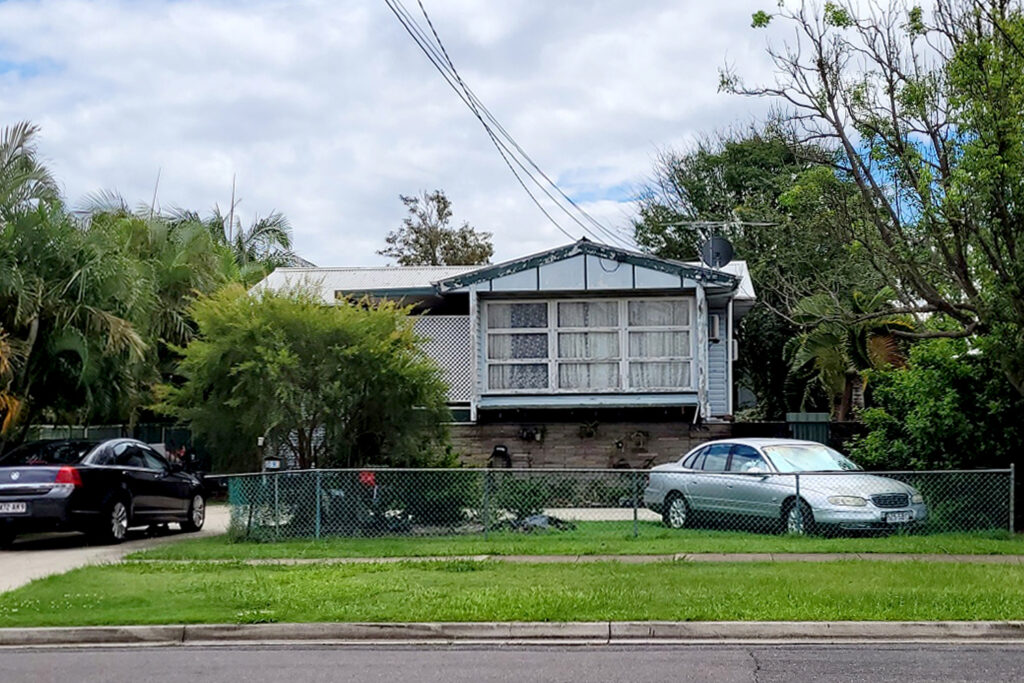
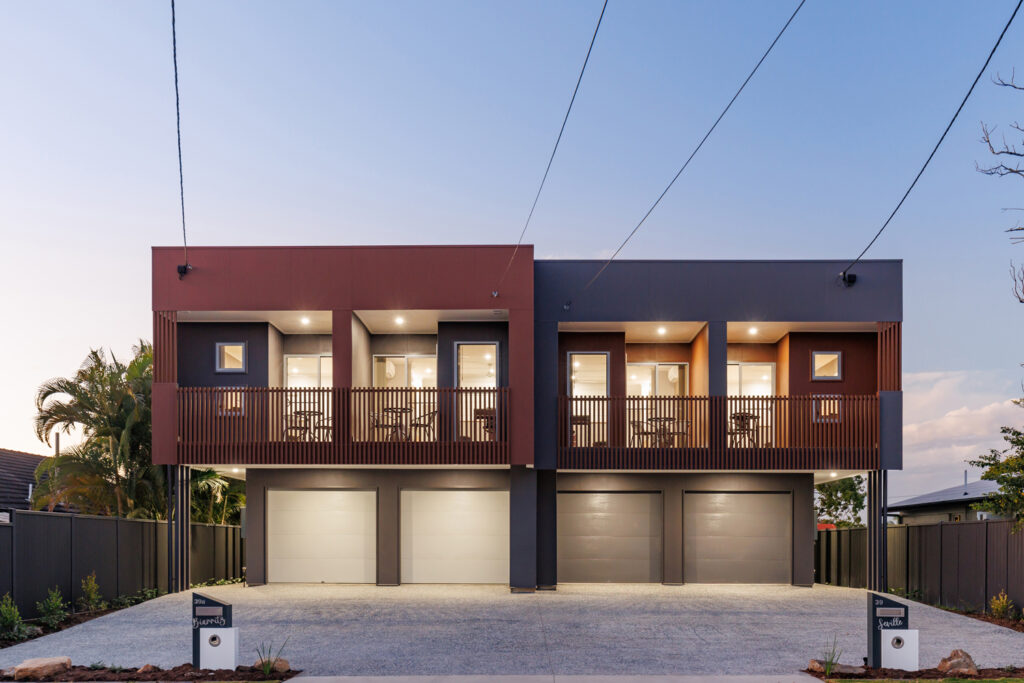
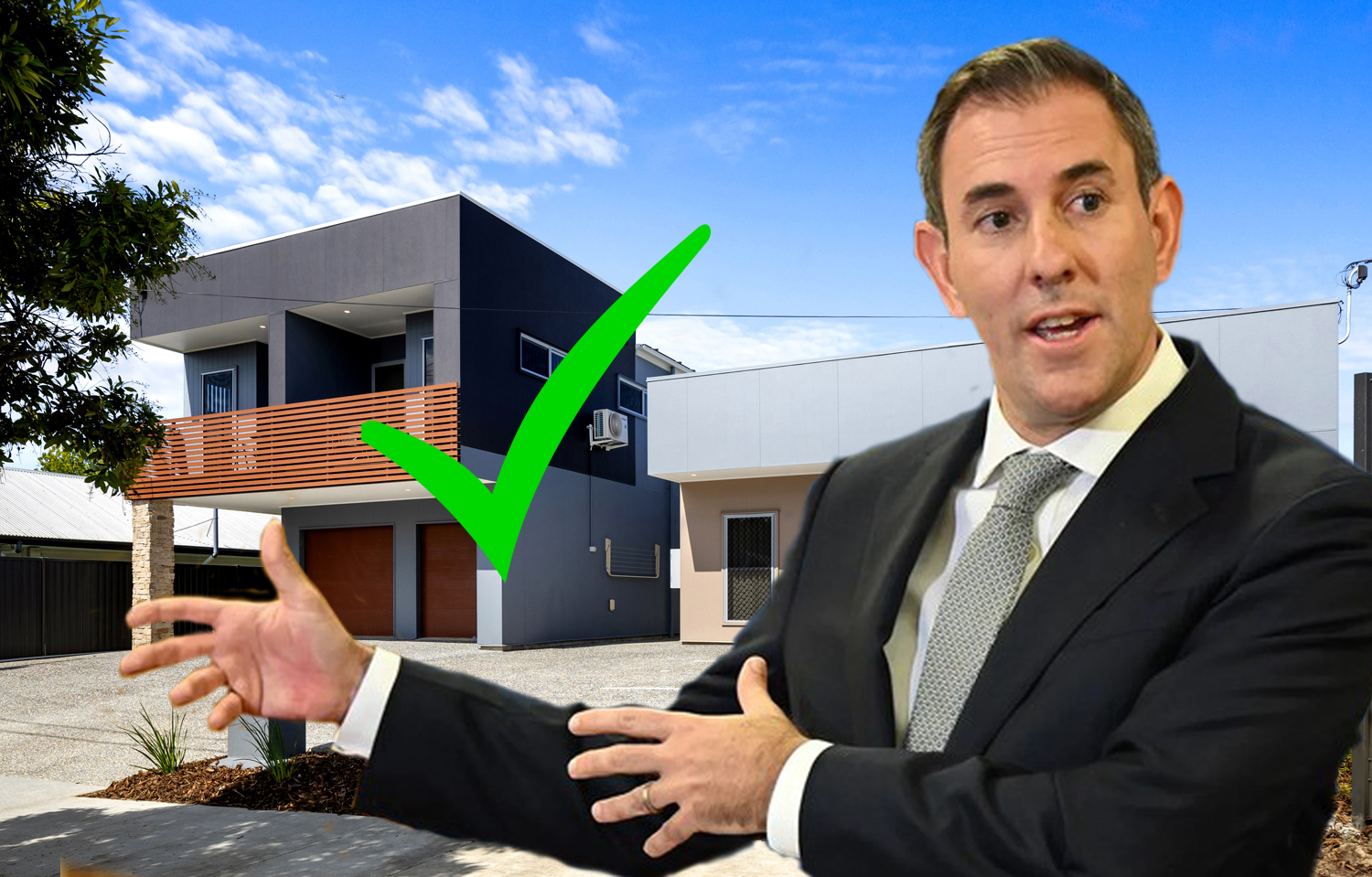
(Above) Before and After. From and old house for a single household to two high set rooming houses for 10 individual residents. © Brisbane Rooming Houses
Depreciation Remains a Major Advantage
New construction also provides substantial depreciation opportunities.
Unlike older investment properties, newly built rooming accommodation generally includes significant depreciable assets.
These commonly include:
- the building structure;
- flooring;
- air-conditioning systems;
- furniture;
- beds;
- televisions;
- refrigerators;
- washing machines;
- dryers;
- blinds;
- kitchen appliances;
- hot water systems; and
- numerous other plant and equipment items.
Because rooming houses are commonly fully furnished and professionally presented, the value of depreciable assets is often considerably higher than a conventional residential investment property.
That allows investors to receive substantial depreciation deductions while still owning an asset capable of producing strong positive cash flow.
Very few investment strategies combine both.
Demand Continues to Grow
The long-term outlook for rooming accommodation is driven by three primary factors.
- People need affordable housing.
- The rapid rise of single-person households.
- The explosive growth of the gig economy and flexible employment.
Queensland continues experiencing significant population growth. At the same time, rising property prices, higher interest rates and increasing rental costs are placing enormous pressure on many Australians.
Professionally managed rooming accommodation provides an affordable, modern and practical housing solution for:
- key workers;
- healthcare employees;
- hospitality staff;
- construction workers;
- IT engineers
- police officers
- small business owners
- newly separated people;
- fly in, fly out workers
- single professionals; and
- people relocating to new cities.
This demand is structural. It isn’t driven by speculation. It is driven by demographics and affordability. As affordability pressures continue, demand for quality rooming accommodation is likely to remain strong.
Government Policy Continues Supporting New Supply
The Budget also continues recognizing the importance of new residential construction through concessions applying to new developments and certain investment structures.
These measures further reinforce the Government’s objective of increasing housing supply rather than encouraging competition for existing housing stock. For investors focused on developing new rooming accommodation, this policy direction aligns closely with the type of projects governments are actively seeking to encourage.
Rather than fighting against policy, rooming accommodation is moving with it.
Long-Term Investors Benefit Most
One issue creating unnecessary concern among investors has been discussion around Capital Gains Tax. It is important to remember a simple fact – Capital Gains Tax is generally only triggered when an asset is sold.
Investors adopting a long-term hold strategy are primarily focused on building passive income, increasing equity and allowing rental growth to compound over many years.
The objective is not frequent buying and selling. It is long-term wealth creation.
Cash flow today. Equity tomorrow. Financial freedom over time.
Why We Believe the Opportunity Has Become Even Stronger
Long before the 2026 Budget, professionally developed rooming accommodation already offered several compelling advantages over conventional residential investing.
Today, those advantages appear even more pronounced.
The strategy combines:
- strong rental demand;
- multiple income streams;
- positive cash flow;
- significant depreciation opportunities;
- manufactured equity;
- long-term capital growth potential;
- increased housing supply; and
- alignment with Government housing objectives.
Few investment strategies offer that powerful combination.
Our Wealth Creation Strategy – Now Even More Powerful
Over many years we have refined a specialized development model that allows investors to leverage the experience, systems, knowledge and buying power of an experienced rooming accommodation developer without needing to become a developer themselves.
Investors become what we call the “armchair developer.”
Rather than learning through years of costly mistakes, they benefit from proven systems, established consultant networks, experienced project management and development expertise.
Under our latest strategy, investors may be able to transform approximately $600,000 to $675,000 in available capital into two professionally developed rooming houses capable of generating more than $340,000 in combined annual gross rental income while potentially creating approximately $800,000 to $1.2 million in manufactured equity, subject to project location, market conditions, finance, construction costs and individual circumstances.
That represents a fundamentally different approach to wealth creation.
Rather than waiting decades for capital growth while funding ongoing losses, investors focus on creating value immediately, generating strong rental income and building long-term wealth through cash flow, equity and strategic development.
The Bottom Line
The 2026 Federal Budget represents a significant shift in Australia’s property investment landscape.
For traditional investors relying on established, negatively geared properties, the environment has become more challenging.
For investors creating new housing supply through professionally developed rooming accommodation, the long-term outlook has become even stronger.
Government policy is increasingly rewarding projects that add housing.
Rental demand continues to grow. Affordability pressures continue increasing.

Cash flow has become more valuable than ever. In our view, these trends all point in the same direction. The future belongs to investment strategies that generate income, create additional housing supply, manufacture equity and produce sustainable long-term returns.
Professionally developed rooming accommodation continues to deliver all four.
Disclaimer: This article contains general information only and does not constitute financial, taxation or legal advice. Investors should obtain independent professional advice regarding their individual circumstances before making any investment decision. Budget measures may be subject to legislation and amendment before taking effect.
About the author:
Paul Zanetti is the Founder and Director of Brisbane Rooming Houses Pty Ltd, a developer, builder and property manager of rooming accommodation.
Paul has been the leading proponent in Queensland for a new type of rooming houses – ‘Executive Living’ designer studios for key workers – a proprietary model that delivers exceptional returns to investors.
He has written books on rooming accommodation, referred to as ‘industry bibles’ and prepared and published multiple reports for governments identifying regulatory, planning and infrastructure-charging anomalies affecting rooming accommodation in Queensland. His advocacy has included engagement with State Planning Ministers, senior departmental officers and Directors-General, as well as local government elected representatives, planning officials and other relevant stakeholders.
Paul continues to advocate for evidence-based planning reform and the development of proportionate regulatory frameworks capable of supporting the delivery of affordable housing by the private sector.
Where appropriate reform cannot be achieved through constructive engagement with State and Local Governments, Paul is prepared to work with affected industry participants to pursue appropriate administrative reviews and judicial applications to obtain independent consideration of the legality, validity and proportionality of the relevant regulatory frameworks
Paul can be contacted at: paul@brisbaneroominghouses.com.au