
Rooming houses have emerged as one of Australia’s strongest-performing residential property investments, delivering attractive rental yields while providing affordable accommodation for key workers, singles and those seeking quality, lower-cost housing options.
However, unlike traditional residential investments, one property is leased to a single tenant or family.
Rooming accommodation generates multiple rental streams from individual residents, creating stronger cash flow and reducing vacancy risk.
Additionally, this pattern supports rooming houses ROI returns over time.
For investors considering this asset class, one of the most common questions is:
“What rental returns can I expect from a rooming house investment?”
The answer depends largely on whether you purchase an existing rooming house at retail prices or develop or build one yourself, as well as whether the property is located in a metropolitan or regional market.
Buying an Existing Rooming House
Purchasing an established rooming house is often the easiest – but more expensive- way to enter the market.
The property is already designed, approved, built and tenanted, meaning investors can begin receiving rental income immediately without undertaking the complexities and risks associated with development.
However, because someone else has already purchased the land, obtained planning and building approvals, developed the land, constructed the building and assumed the development risk, investors purchasing these properties are paying retail prices.
Consequently, gross rental yields are generally lower than those achieved if investors develop or build from scratch.
In Brisbane, (in mid-2026), investors purchasing an existing rooming house can typically expect:
- Gross rental yield: 7% to 8%
- Net rental yield: Approximately 5.5% to 6.5%
For many investors, these returns still outperform conventional residential property, where gross yields commonly range between 3% and 4%.
Ready built rooming houses are generally tightly held due to their high returns, so are not plentiful on the open market.
When they do become available, competition is often fierce among buyers, so prices can often go beyond the asking price, lowering the gross and net yield. Often the better option is to develop and build from scratch for certainty an higher returns.
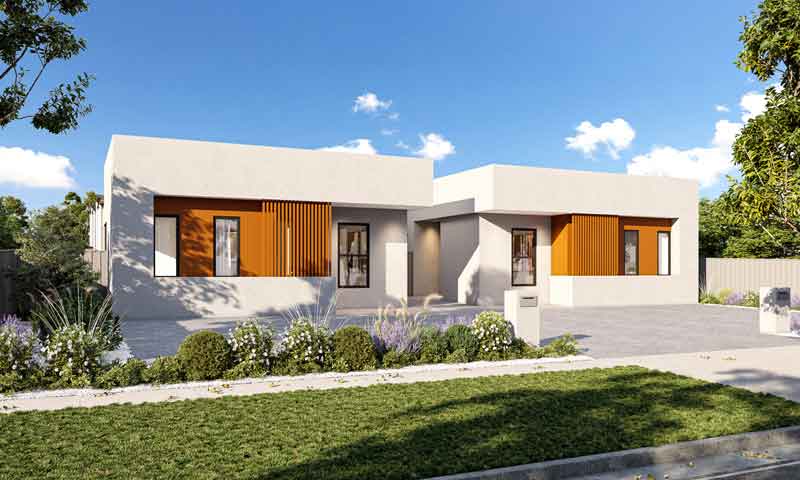
Developing or Building a Rooming House
Developing a rooming house allows you to capture the developer’s margin rather than paying someone else’s profit.
While development requires more expertise, patience and capital, the financial rewards are usually substantially greater. Partnering with an experienced, specialist rooming house developer with many years of experience will remove uncertainty and risk.
Purchasing land, obtaining approvals and constructing the dwelling yourself, investment cost is generally lower than the market value of an equivalent completed property.
This means the rental income represents a higher percentage return on investment.
Investors developing or building rooming accommodation in Brisbane can generally expect:
- Gross rental yield: 8.5% to 10%
- Net rental yield: Approximately 7% to 8.5%
Again, deducting approximately 1.5% from the gross yield provides a reasonable estimate of net returns after annual operating expenses.
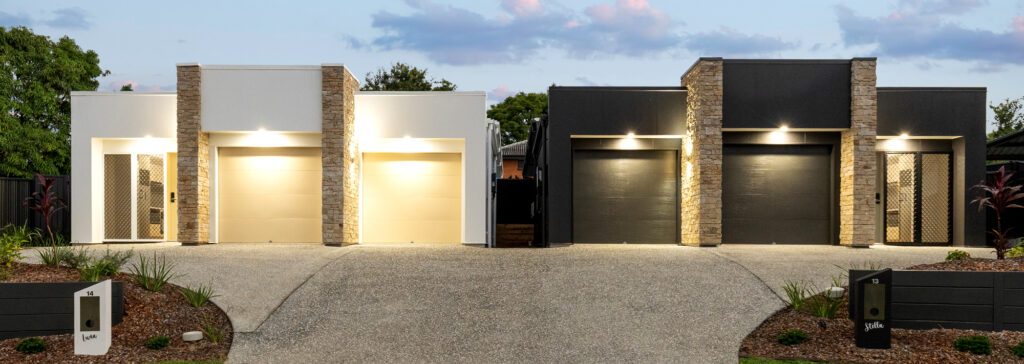
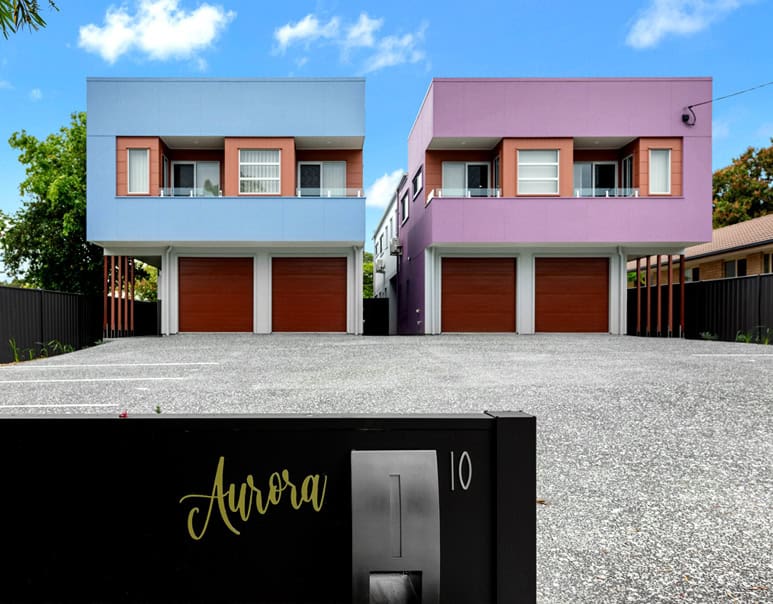
A development for two rooming houses by © Brisbane Rooming Houses
This immediate creation of wealth, combined with strong rental yields and long-term capital appreciation, is one of the key reasons many investors choose to develop rather than buy at retail prices.
For investors seeking long-term wealth creation, this combination of development profit, higher cash flow and capital growth can create a powerful investment strategy.
One of the greatest advantages of developing your own rooming house is the opportunity to create ‘manufactured capital growth’.
By purchasing land and undertaking a development, investors can often build instant equity that would otherwise be paid to a developer when buying an established property.
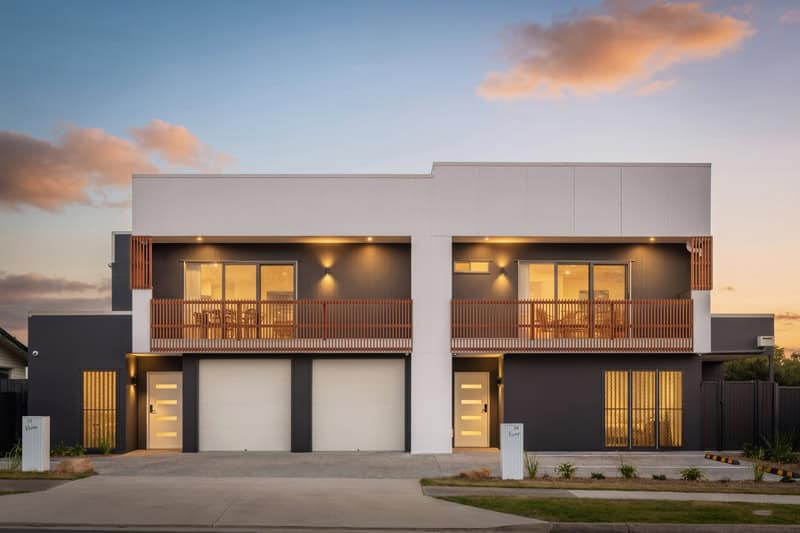
© Brisbane Rooming Houses
In a major metropolitan market such as Brisbane, manufactured capital growth of around $150,000 per rooming house is achievable when building on a vacant block of land.The potential uplift can be even greater when purchasing a large allotment and subdividing it into two separate lots for the construction of two rooming houses.
In this scenario, investors may achieve approximately $300,000 in manufactured capital growth per dwelling, resulting in a combined increase in equity of around $600,000 upon completion.
This immediate creation of wealth, combined with strong rental yields and long-term capital appreciation, is one of the key reasons many investors choose to develop rather than buy at retail prices.
Regional Rooming Houses Can Deliver Outstanding Returns
Some of the strongest returns are achieved in regional centers where land values remain significantly lower than capital cities.
Construction costs are often comparable to metropolitan areas, but because land acquisition represents a much smaller proportion of total development cost, the overall project cost is reduced while rental demand remains strong.
Many regional centers experience acute shortages of accommodation for healthcare workers, hospitality staff, apprentices, seasonal workers and other essential employees.
As a result, well-designed rooming accommodation can command excellent occupancy levels and attractive, even similar rents to capital city rooming houses.
It is not uncommon for regional developments to achieve:
- Gross rental yields of 12% or more
- Net rental yields of approximately 10.5% after operating expenses
These returns can provide exceptional cash flow and make regional rooming accommodation one of the highest-yielding residential investment classes available.
With the right planning approval, investors can create substantial equity through development.
Naturally, investors should undertake careful due diligence regarding local employment, population growth and housing demand before selecting any regional market.

In some regional cities, the opportunity for manufactured capital growth can be even more significant due to lower land acquisition costs and strong demand for quality accommodation.
When developing two rooming houses on a suitable site, manufactured capital growth can exceed $500,000 per house, delivering a combined uplift of more than $1 million upon completion.
Gross Yield Versus Net Yield
One of the most common mistakes investors make is focusing solely on gross rental yield.
Gross yield simply measures rental income before expenses and provides only part of the investment picture.
Net yield is a far more meaningful indicator because it reflects the property’s actual performance after operating costs.
A property with a slightly lower gross yield but lower ongoing expenses may outperform another property with a higher gross yield but significantly higher annual costs.
As a general guide for rooming accommodation, allowing approximately 1.5% of the property’s value for annual operating expenses provides a practical estimate when comparing investment opportunities.
Understanding Operating Expenses
Every investment property incurs ongoing costs, and rooming accommodation is no exception.
Although rooming houses generally produce higher rental income than conventional residential properties, investors should budget appropriately for annual operating expenses.
These costs vary depending on property size, management structure, insurance coverage and local council charges.
Property Management
Professional management is one of the largest annual expenses.
Effective property management includes resident selection, rent collection, inspections, maintenance coordination, compliance and day-to-day tenant communication.
Management fees generally range from:
- 6% plus GST through specialist providers such as Brisbane Rooming Houses
- 8% plus GST through general real estate agent property managers
- from 10% to 15% or more in some Australian states where management services may be limited
While lower management fees improve returns, investors should consider the quality of management rather than simply choosing the cheapest provider. Experienced managers can significantly reduce vacancies, minimize disputes and protect long-term asset performance.

Insurance
Insurance is another major operating expense.
A comprehensive policy should provide protection for:
- Building
- Public liability
- Landlord protection
- Rental default
- Furnishings
- Fixtures and fittings
Annual premiums typically range from $2,500 to over $4,000 per year depending on the insurer, property size and level of cover selected. In some States where up to twelve occupants are living in a 300m2 house, insurers will charge as high as $7,000 or more per year due to the higher assessed risk.
Choosing appropriate insurance is essential to protecting both rental income and the underlying asset.
Internet Services
High-speed internet has become an expected inclusion in many executive rooming houses.
Providing reliable internet improves tenant satisfaction and enhances marketability.
Allow approximately $90 per month and upwards depending on the service provider and speed requirements.
Cleaning of Common Areas
Maintaining shared kitchens, hallways and communal spaces contributes to resident satisfaction and preserves the property’s presentation.
Professional cleaning generally costs $60 to $70 or more per month depending on the size of the property and cleaning frequency.
Lawn and Garden Maintenance
Regular lawn mowing and garden maintenance ensure the property remains attractive and compliant with council requirements.
Allow from $80 per month upwards depending on block size and landscaping.
Smoke Alarm Inspections
Queensland and many other jurisdictions require smoke alarm systems to be regularly tested and maintained.
Professional inspection services typically cost around $250 per annum and provide valuable compliance documentation.
Emergency Lighting and Fire Equipment
Emergency evacuation lighting and fire extinguishers require scheduled inspection and testing.
These essential life-safety systems generally cost approximately $380 per annum for routine servicing.
Pest Inspections
Annual pest inspections help identify termite activity and other issues before significant damage occurs.
Budget approximately $275 per annum for routine inspections.
Council Rates
Council rates vary between local government areas and property valuations.
Many investors should allow up to $3,000 or more per annum, depending on location and council charging structures.
Water Rates
Water charges can vary significantly depending on local authority pricing and resident consumption.
A reasonable allowance is around $2,000 or more per annum.
Land Tax
Land tax is often overlooked by new investors.
The amount payable depends on:
- The state or territory
- Applicable land tax thresholds
- The property’s Unimproved Capital Value (UCV)
- Whether the investor owns multiple properties
As thresholds and rates vary between jurisdictions, investors should seek independent taxation advice when assessing projected returns.
In major metro cities and concentrated areas where land values have risen sharply, many investors have been caught out with land tax.
This is where regional areas may be worth consideration, as the UCV may be significantly lower, so no land tax is payable (2026).
Total Annual Operating Costs
Although every property differs, investors should generally budget between $20,000 and $30,000 per annum for operating expenses.
The largest variables are usually:
- Property management fees
- Insurance premiums
- Council and water charges
- Land tax obligations
Well-managed properties with efficient operating systems often perform at the lower end of this range.
Cash Flow Is the Key Advantage
The principal attraction of rooming accommodation is strong positive cash flow.
While many conventional residential properties require ongoing owner contributions to service debt, quality rooming accommodation generally generate surplus income after expenses.
This stronger cash flow provides investors with greater flexibility to reduce debt, reinvest in additional properties or build long-term wealth.
Combined with population growth, housing shortages and increasing demand for affordable accommodation, rooming houses continue to represent a compelling investment opportunity.
Conclusion
Rooming accommodation offers investors some of the strongest rental yields available within Australia’s residential property sector.
Investors purchasing an established rooming house in Brisbane can generally expect gross yields between 7% and 8%, reducing to approximately 5.5% to 6.5% net after operating expenses.
Those developing or building their own projects can typically achieve gross returns of 8.5% to 10%, with net yields of around 7% to 8.5%.
Regional developments, where land costs are substantially lower, may produce gross yields exceeding 12%, delivering net returns of approximately 10.5% or higher after expenses.
While every investment should be assessed on its own merits, understanding both expected income and operating costs enables investors to make informed decisions and accurately evaluate the true performance of a rooming house investment.
For investors seeking higher cash flow, multiple income streams and long-term capital growth, professionally designed and managed rooming accommodation continues to be one of Australia’s most attractive property investment opportunities.
About the author:
Paul Zanetti is the Founder and Director of Brisbane Rooming Houses Pty Ltd, a developer, builder and property manager of rooming accommodation.
Paul has been the leading proponent in Queensland for a new type of rooming houses – ‘Executive Living’ designer studios for key workers – a proprietary model that delivers exceptional returns to investors.
He has written books on rooming accommodation, referred to as ‘industry bibles’ and prepared and published multiple reports for governments identifying regulatory, planning and infrastructure-charging anomalies affecting rooming accommodation in Queensland. His advocacy has included engagement with State Planning Ministers, senior departmental officers and Directors-General, as well as local government elected representatives, planning officials and other relevant stakeholders.
Paul continues to advocate for evidence-based planning reform and the development of proportionate regulatory frameworks capable of supporting the delivery of affordable housing by the private sector.
Where appropriate reform cannot be achieved through constructive engagement with State and Local Governments, Paul is prepared to work with affected industry participants to pursue appropriate administrative reviews and judicial applications to obtain independent consideration of the legality, validity and proportionality of the relevant regulatory frameworks
Paul can be contacted at: paul@brisbaneroominghouses.com.au