

Rooming house investment prospects
As Australia’s housing affordability crisis continues to deepen, investors are increasingly looking beyond traditional residential property.
Moreover, they seek stronger returns and more resilient cash flow through rooming house investment.
For decades, the conventional investment strategy was simple.
Historically, it involved purchasing a house and leasing it to a single family.
Investors then relied on rental income. Moreover, long-term capital growth in a rooming house investment followed.
Rising interest rates and higher costs have reduced profitability for many traditional residential investments. As a result, investors may reconsider these assets.
Furthermore, against this backdrop, rooming house investment has emerged as one of Australia’s fastest-growing property investment sectors.
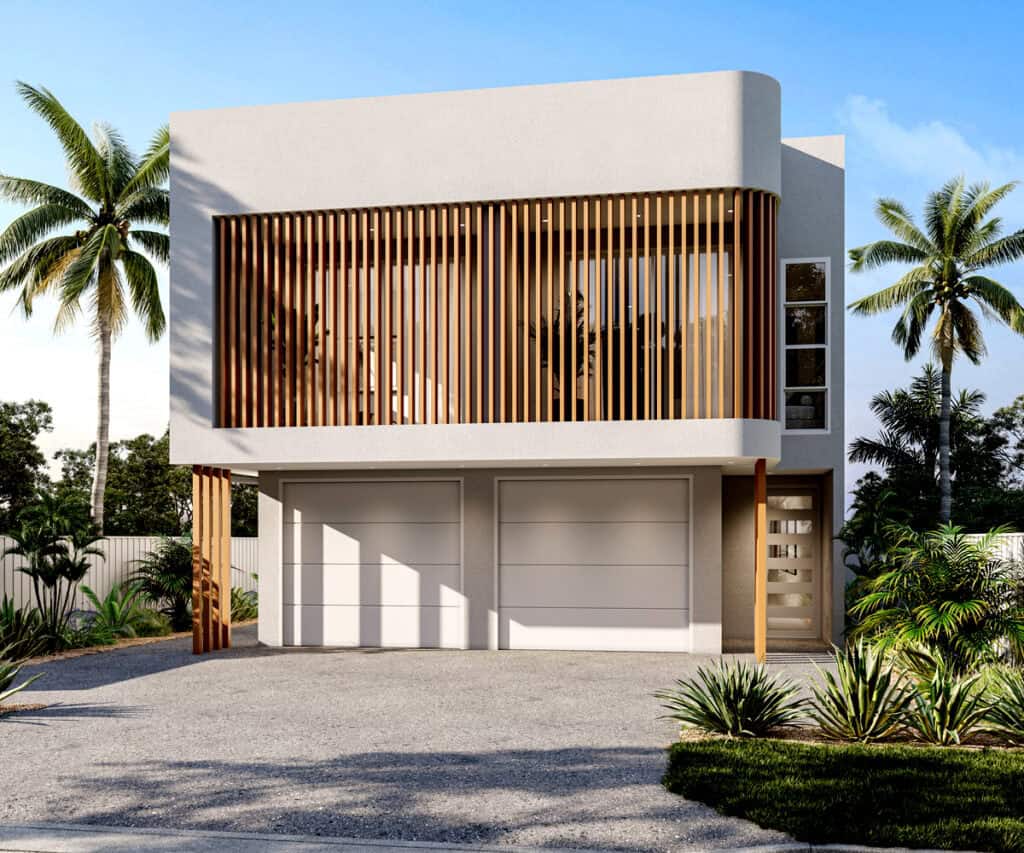
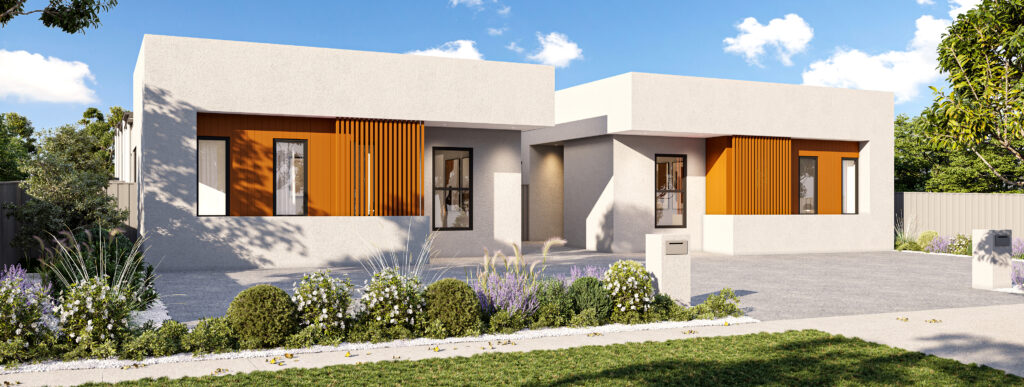
Notably, the ‘Hayman’ is a high-set rooming house by Brisbane Rooming Houses.
Rooming houses built for a purpose provide affordable accommodation for key workers and essential employees.
They also deliver significantly higher rental income than conventional housing.
Moreover, they also align with government objectives to increase housing supply, making them an increasingly attractive investment proposition.
For investors seeking strong cash flow, high rental yields, and substantial tax advantages, the answer is yes. Moreover, like any investment, success depends on selecting the right property, understanding regulatory requirements, and engaging experienced professionals.
This article examines the advantages and disadvantages of investing in rooming accommodation. Additionally, it covers rental yields, occupancy rates, depreciation benefits, capital growth potential, and impact of recent Federal Government housing initiatives.
What Is a Rooming House?
A rooming house is a residential property where individual bedrooms are rented separately rather than leasing the entire dwelling to one household.
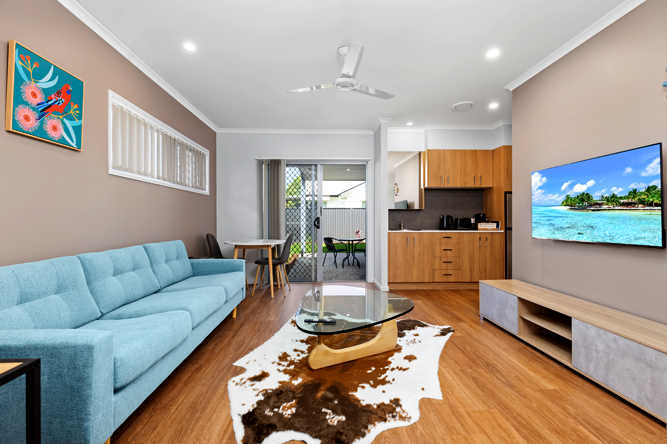
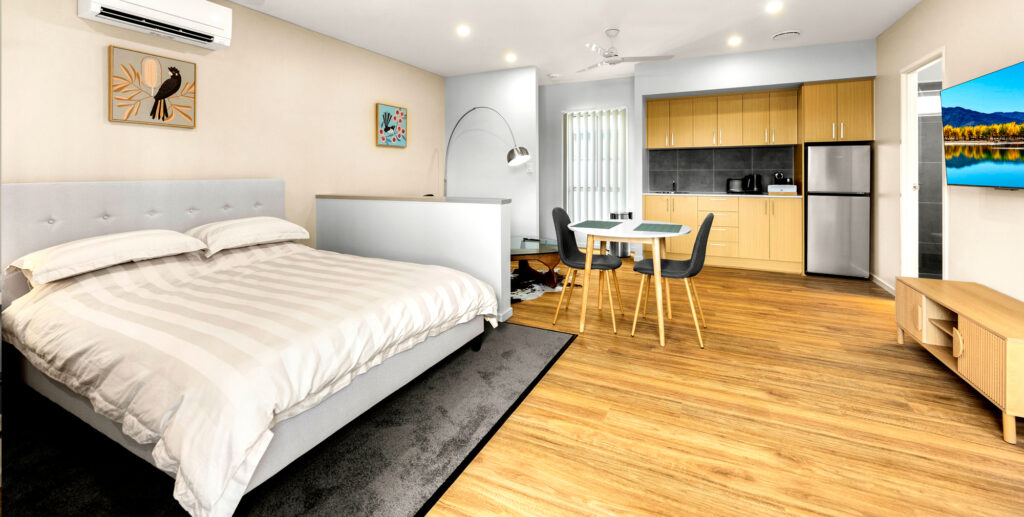
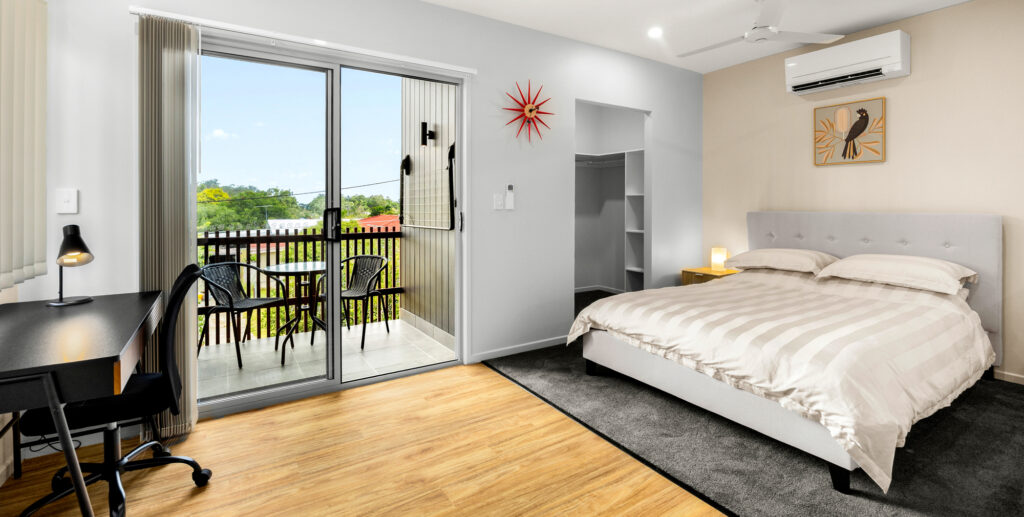
Residents enjoy private accommodation while sharing communal facilities such as kitchens, laundries and outdoor areas. Many modern developments also provide private en-suites and kitchenettes, creating a high level of independence while maintaining affordability.
Today’s rooming accommodation bears little resemblance to the boarding houses of previous generations.
Purpose-built developments typically include:
- Large private bedrooms
- Private ensuite bathrooms
- Kitchenettes
- Air conditioning
- High-speed internet
- Security access systems
- Modern communal kitchens
- Outdoor entertainment areas
- Professional property management
These homes appeal to nurses, teachers, police officers, hospitality workers, construction employees, students, retirees and many other Australians seeking quality accommodation at an affordable price.
Why Rooming Accommodation Is Growing in Popularity
Australia continues to experience a severe shortage of affordable rental housing.
Strong population growth, overseas migration, increasing construction costs and years of underbuilding have contributed to historically low vacancy rates across many cities.
At the same time, investors are looking for assets that generate reliable income rather than relying solely on capital growth.
Rooming accommodation addresses both challenges.
It increases the supply of affordable housing while producing multiple income streams from a single property, creating an investment model that can deliver substantially stronger cash flow than a conventional rental home.
Government Housing Policies Are Supporting New Housing Supply
Recent Federal Government housing initiatives have reinforced the importance of increasing housing supply across Australia.
Policies encouraging new housing construction recognize that Australia’s affordability challenges cannot be solved without delivering more dwellings.
Purpose-built rooming accommodation aligns strongly with these objectives because it creates additional accommodation where demand is greatest.
Investors who subdivide land and construct two rooming houses instead of retaining a single dwelling (which is the primary strategy here at Brisbane Rooming Houses) effectively increase housing stock, making more accommodation available for essential workers and lower-income Australians.
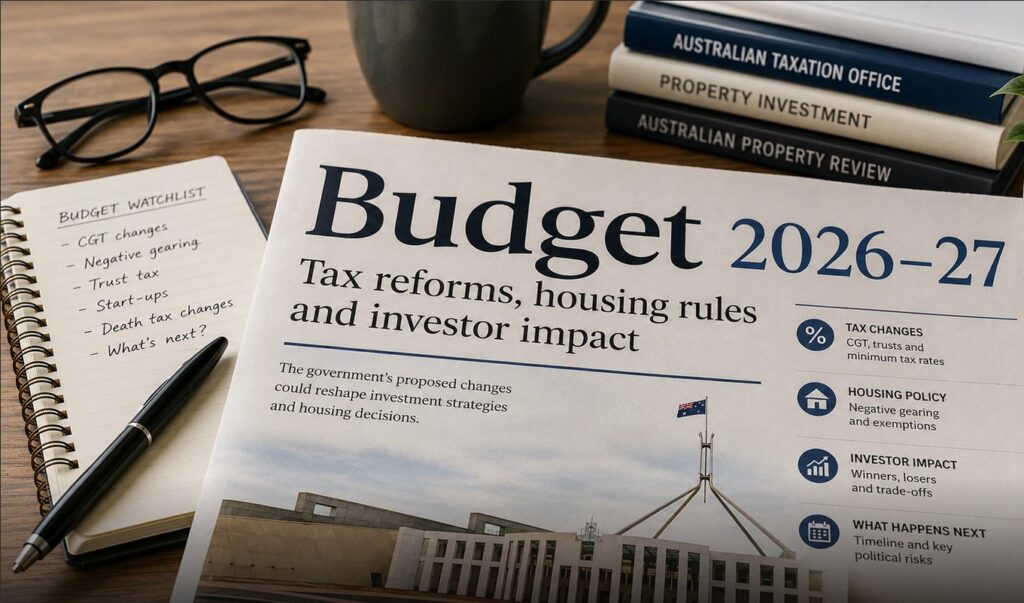
This focus on delivering new supply positions rooming accommodation as an investment that not only benefits owners financially but also contributes to addressing Australia’s housing shortage.
Investors who subdivide land and construct two rooming houses instead of retaining a single dwelling (which is the primary strategy here at Brisbane Rooming Houses) effectively increase housing stock, making more accommodation available for essential workers and lower-income Australians.
This focus on delivering new supply positions rooming accommodation as an investment that not only benefits owners financially but also contributes to addressing Australia’s housing shortage.
New Construction Creates Significant Tax Advantages
One of the greatest financial benefits of investing in newly constructed rooming accommodation is access to substantial depreciation deductions.
Unlike older properties where depreciation benefits may have largely expired, new builds allow investors to claim deductions on both the building structure and plant and equipment.
These deductions can significantly reduce taxable income while the property continues generating strong positive cash flow. These deductions can significantly reduce taxable income while the property continues generating strong positive cash flow.
Depreciable assets commonly include:
- Air conditioning systems
- Kitchen appliances
- Carpets
- Window furnishings
- Hot water systems
- Furniture
- Beds
- Mattresses
- Whitegoods
- Security systems
- Television units
- Built-in cabinetry
- and more…
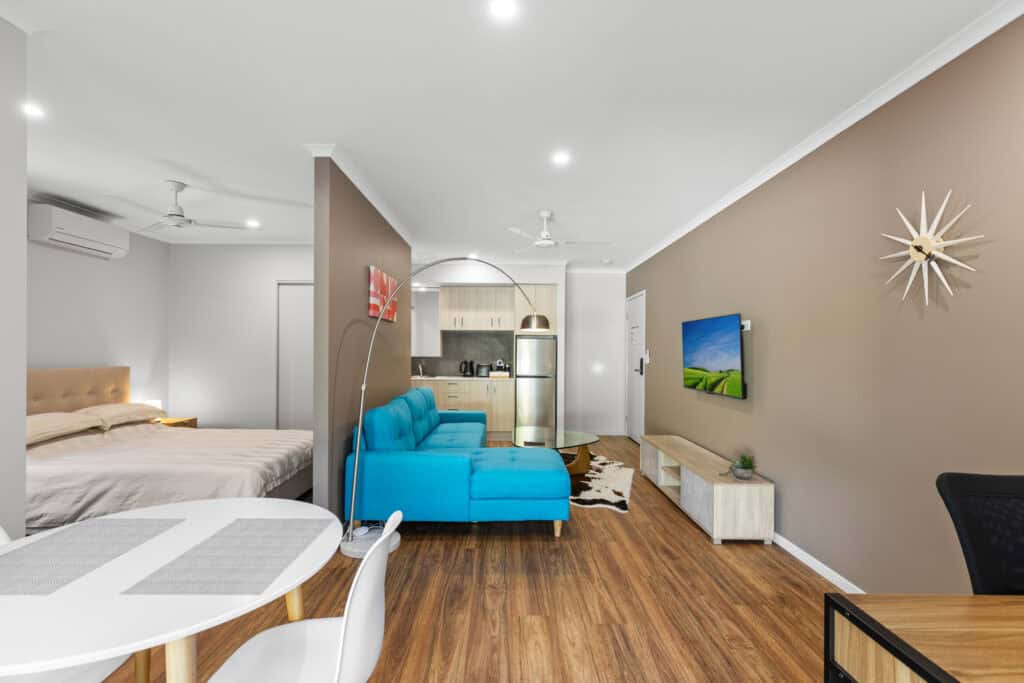
The result is often a property that produces positive cash flow while simultaneously generating substantial tax deductions.
For many investors, this creates one of the most tax-effective property investment structures available.
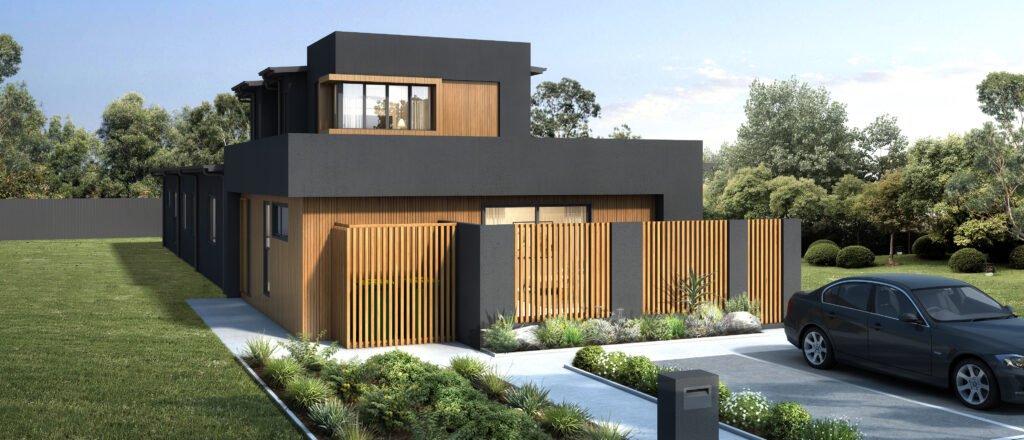
Preserving the Benefits of Negative Gearing
Although purpose-built rooming houses are frequently positively geared, investors may still benefit from Australia’s negative gearing framework.
Where depreciation and allowable deductions exceed taxable income, these losses can generally be offset against other assessable income, subject to an investor’s individual circumstances and prevailing tax law.
The combination of strong rental income and significant depreciation allowances can substantially improve after-tax returns.
This unique combination means investors may enjoy positive cash flow while still accessing valuable tax deductions that reduce their overall tax liability.
As always, investors should obtain independent taxation advice tailored to their own circumstances.
Higher Rental Yields
Perhaps the greatest attraction of rooming accommodation is its superior rental yield.
Rather than relying on a single tenant paying one weekly rent, investors receive income from multiple individual rooms. In Brisbane this translates to five rooms, five rents in low density zones and in some regional Queensland areas, more rooms and more rents are permissible with a development application.
For example, an existing standard four-bedroom home leased to one family might generate $850 per week.
The same property redesigned as five professionally appointed studio-style rooms could generate approximately $500 to $580 per room each week (which is what we regularly achieve at Brisbane Rooming Houses), producing total rental income of around $2,750 to $3,000 per week.
In some regional cities and towns, rents can exceed $3,000 per house.
Higher yields provide greater resilience against rising interest rates and improve the overall financial performance of the investment.
Positive Cash Flow
One of the biggest frustrations for many residential investors is owning a negatively geared property that requires ongoing financial contributions every month.
Rooming accommodation reverses this equation.
Positive cash flow means rental income exceeds mortgage repayments and operating expenses, leaving surplus income available to the owner.
Positive cash flow means rental income exceeds mortgage repayments and operating expenses, leaving surplus income available to the owner.

For investors seeking financial independence or passive income, this represents a major advantage.
Positive cash flow also provides greater flexibility during changing economic conditions and reduces financial stress associated with increasing interest rates.
Diversified Income Reduces Risk
Traditional residential investment depends entirely upon one tenant. If that tenant vacates, rental income immediately falls to zero.
Rooming accommodation spreads this risk across multiple residents. If one tenant moves out of a five-room property, four rooms continue generating income while the vacant room is re-let.
This diversification creates a far more stable income stream and reduces the financial impact of individual vacancies.
In many respects, it resembles holding a diversified investment portfolio rather than relying on a single asset.
Strong Occupancy Rates
Demand for affordable accommodation continues to exceed supply in many Australian cities.
Essential workers often cannot afford detached homes or apartments close to employment centers but still require quality accommodation.
Purpose-built rooming houses located near hospitals, universities, transport hubs and employment precincts frequently experience exceptionally strong occupancy levels.
Properties offering privacy, security, quality design and professional management often retain tenants for extended periods, reducing vacancy and turnover costs.

Meeting Australia’s Housing Needs
Beyond financial returns, rooming accommodation performs an important social function.
It provides affordable housing for people who contribute significantly to the economy yet struggle to access conventional rental housing.
Teachers, nurses, hospitality workers, apprentices, cleaners and retail employees all benefit from professionally managed rooming accommodation.
By increasing affordable housing supply, investors are helping address one of Australia’s most pressing economic and social challenges.
Capital Growth
Although rooming accommodation is often viewed as a cash-flow investment, long-term capital growth should not be overlooked.
Property values continue to be driven primarily by location and land value.
Well-located sites in growing metropolitan regions may experience substantial appreciation over time.
In addition, properties generating exceptional income attract premium pricing from investors seeking strong yields.
Successful rooming accommodation therefore has the potential to deliver both superior income and long-term capital growth.
Manufactured Capital Growth
One of the most compelling reasons investors choose to develop purpose-built rooming accommodation is the opportunity to create substantial manufactured capital growth from day one.
Unlike a traditional investment property, where capital growth largely depends on market appreciation over many years, a well-designed rooming house can create equity through the development process itself. This is because commercial valuations are often heavily influenced by the property’s income-producing capacity.
As rooming accommodation generates significantly higher rental income on a per-room basis than a conventional residential dwelling, the completed property’s valuation can exceed the total land acquisition, development and construction costs.
In many cases, investors may create between $300,000 and $600,000 in manufactured equity per house, depending on the location, design, rental income and market conditions.
This uplift has been achieved by us at Brisbane Rooming Houses over several years, by transforming a standard residential older house site into a high-income-producing asset that attracts investors seeking strong cash flow and superior yields.
For example, a development costing $1.3 million to acquire, design, develop, construct and furnish may achieve a completed valuation of $1.6 million to $1.9 million when supported by its commercial rental income.
The result is the creation of significant equity without waiting years for the market to appreciate naturally. This equity can then strengthen an investor’s balance sheet and, subject to lender policies, may assist in funding future acquisitions and accelerating portfolio growth.
Even more attractive is that this manufactured capital growth is achieved while creating brand-new housing stock that addresses Australia’s chronic shortage of affordable accommodation. Investors are not simply relying on rising property prices—they are actively adding value by delivering a purpose-built income-producing asset that meets strong market demand.
While finance costs and interest expenses should always be factored into a project’s feasibility, the combination of manufactured equity, positive cash flow, high rental yields and substantial depreciation benefits makes professionally designed rooming accommodation one of the most attractive property investment strategies available in Australia today.
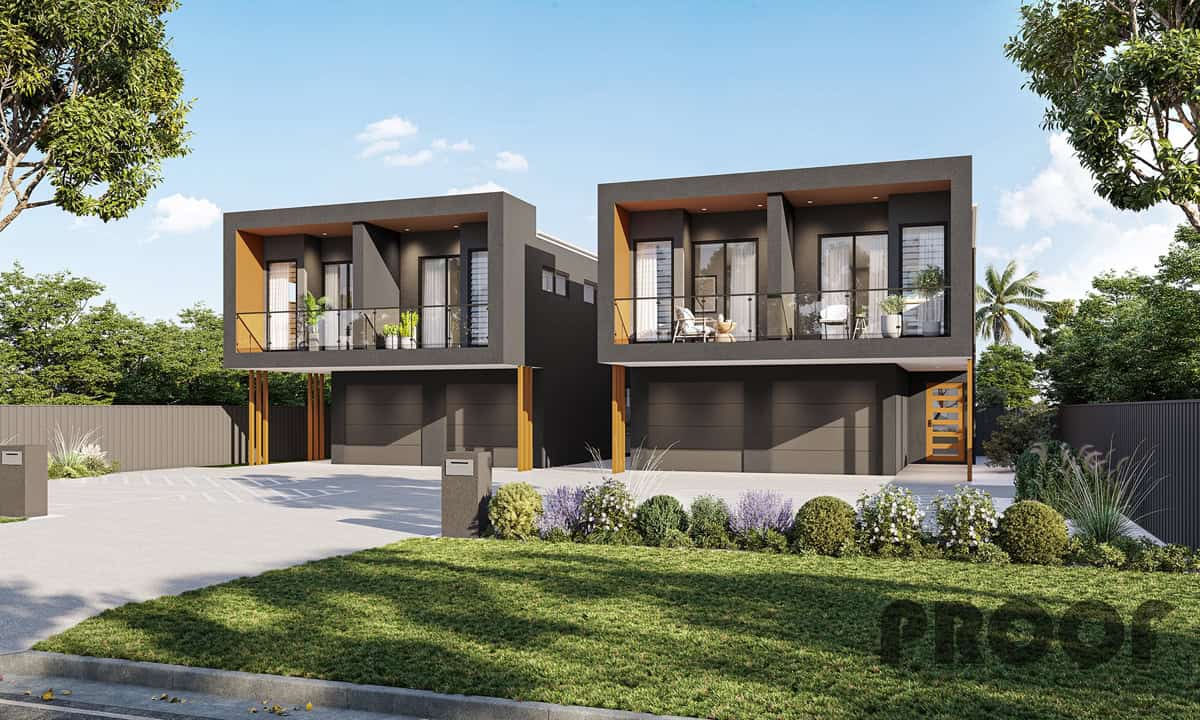
Even more attractive is that this manufactured capital growth is achieved while creating brand-new housing stock that addresses Australia’s chronic shortage of affordable accommodation.
Investors are not simply relying on rising property prices—they are actively adding value by delivering a purpose-built income-producing asset that meets strong market demand.
While finance costs and interest expenses should always be factored into a project’s feasibility, the combination of manufactured equity, positive cash flow, high rental yields and substantial depreciation benefits makes professionally designed rooming accommodation one of the most attractive property investment strategies available in Australia today.
Flexible Exit Strategies
Purpose-built rooming accommodation often provides investors with multiple future options.
Owners may choose to:
- Continue owning both rooming houses – either by refinancing the development loan, or outright paying out the development loan
- Sell one house to another investor for profit and pay down any loan debt on the other house which is retained for cash flow
- Sell both rooming houses for profit
This flexibility broadens the property’s appeal and provides additional long-term security.
Professional Management Maximizes Returns
Managing several tenants naturally involves more administration than leasing to one household.
At Brisbane Rooming Houses, we specialize in professional rooming accommodation management, offering competitive rates and comprehensive systems including:
- Tenant screening
- Rent collection
- Maintenance coordination
- Lease management
- Routine inspections
- Compliance monitoring
- Resident communication
Our professional management protects occupancy, reduces arrears and enhances overall investment performance while allowing owners to remain largely passive.
Is Rooming Accommodation Suitable for First-Time Investors?
Many first-time investors are attracted by the prospect of positive cash flow and higher rental returns.
With appropriate education and experienced property management, rooming accommodation can provide an excellent entry into property investing.
Understanding development costs, operating expenses, finance and compliance obligations remains essential before investing.
Who Should Consider Rooming Accommodation?
Rooming accommodation is particularly suited to investors who:
- Seek positive cash flow
- Want higher rental yields
- Value diversified income streams
- Appreciate tax-effective investment structures
- Intend to build long-term passive income
- Support increasing Australia’s housing supply
Investors focused solely on passive capital growth with minimal management involvement may prefer conventional residential property.
The Future Outlook
Australia’s population will continue growing while housing affordability remains under pressure.
Construction costs remain elevated, rental vacancies are low and governments continue encouraging increased housing supply.
Purpose-built rooming accommodation directly addresses these challenges by delivering affordable housing while providing investors with strong financial returns.
The combination of superior rental yields, positive cash flow, significant depreciation deductions and government support for new housing construction places rooming accommodation in a unique position within Australia’s property market.
As more investors recognize these advantages, professionally designed rooming houses are likely to become an increasingly important component of Australia’s housing landscape.
Final Thoughts
So, are rooming houses a good investment?
For investors seeking high cash flow, strong rental yields and exceptional tax efficiency, rooming accommodation represents one of the most compelling opportunities currently available in Australian property.
The ability to generate multiple income streams from a single asset, combined with significant depreciation deductions on new construction and furnishings, creates an investment capable of producing both immediate income and long-term wealth.
Furthermore, by subdividing land and constructing new rooming accommodation, investors are directly increasing Australia’s housing supply in line with government policy objectives while providing quality, affordable accommodation for key and essential workers.
For investors prepared to work with experienced designers, developers and professional property managers, rooming accommodation offers the rare combination of positive cash flow, attractive tax outcomes, resilient occupancy and long-term capital growth potential—making it one of the most attractive property investment strategies available in Australia today.
About the author:
Paul Zanetti is the Founder and Director of Brisbane Rooming Houses Pty Ltd, a developer, builder and property manager of rooming accommodation.
Paul has been the leading proponent in Queensland for a new type of rooming houses – ‘Executive Living designer studios for key workers – a proprietary model that delivers exceptional returns to investors.
He has written books on rooming accommodation, referred to as ‘industry bibles’ and prepared and published multiple reports for governments identifying regulatory, planning and infrastructure-charging anomalies affecting rooming accommodation in Queensland. His advocacy has included engagement with State Planning Ministers, senior departmental officers and Directors-General, as well as local government elected representatives, planning officials and other relevant stakeholders.
Paul continues to advocate for evidence-based planning reform and the development of proportionate regulatory frameworks capable of supporting the delivery of affordable housing by the private sector.
Where appropriate reform cannot be achieved through constructive engagement with State and Local Governments, Paul is prepared to work with affected industry participants to pursue appropriate administrative reviews and judicial applications to obtain independent consideration of the legality, validity and proportionality of the relevant regulatory frameworks
Paul can be contacted at: paul@brisbaneroominghouses.com.au