

This guide shows how to achieve 46.8% cash-on-cash net return and 162.6% net equity return.
Additionally, it creates more than $1 million in additional equity with our Townsville rooming houses development model.
Have you ever wondered why property developers seem to make more money than property investors?
Experienced property developers and investors know cash-on-cash returns are a key wealth tool. This post explains how rooming houses cash on cash returns ROI illustrate wealth growth. Wealth grows through smart financing and aligned operations. By focusing on leverage, occupancy, and expenses, investors realize meaningful gains.
When experience, research, strategies and applications align, investors can realise 46.8% (or more) net return on money and 162.6% (or more) net equity return. Our Townsville rooming houses cash on cash returns illustrate these opportunities
The answer isn’t luck. It isn’t timing the market.
And it certainly isn’t buying investment properties over several decades. Professional property developers understand something many investors never learn – the power of cash-on-cash returns, manufactured equity and leverage.
Rather than waiting years for property prices to increase, developers create enormous value and wealth in two through subdivision, planning approvals, construction and specialist development strategies. This strategy allows rooming house developers and investors in rooming house developments to generate significant equity while simultaneously creating high-performing income-producing assets.
Using a specialist Townsville development strategy, a single project involving two six-bedroom rooming houses can generate:
| Project Outcome | Amount |
|---|---|
| Annual Gross Rental Income | $352,560 |
| Annual Net Rental Income | $311,445 |
| Manufactured Equity (after estimated finance costs) | Approximately $1.08 million |
| Gross Rental Cash-on-Cash Return | 53.0% p.a. |
| Net Rental Cash-on-Cash Return | 46.8% p.a. |
| Equity Cash-on-Cash Return | 162.6% |
These returns are achieved because the investor contributes only part of the total development cost. Specialist development finance funds the balance of the project.
This is how experienced developers accelerate wealth creation.
What Is Cash-on-Cash Return?
Cash-on-Cash Return (often abbreviated to CoC Return) measures how effectively your own invested capital is working for you.
Unlike Return on Investment (ROI), which compares profit against the total project cost, Cash-on-Cash Return focuses only on the amount of money you actually invested.
The formula is simple.
Rental Cash-on-Cash Return
Annual Net Rental Income ÷ Cash Invested × 100
For developers there is another equally important measurement.
Development Cash-on-Cash Return
Manufactured Equity ÷ Investor Cash Contribution × 100
These calculations allow investors to compare different investment opportunities regardless of how much debt is used.
Professional developers use these calculations every day because they answer one simple question:
How hard is my own money working?
Getting Your Money to Work Harder
Most Australians spend their lives working for money. Successful investors reverse that relationship.
Instead of working harder, they make their money work harder. The most successful investors take it one step further.
They use leverage.
Leverage simply means using borrowed money to control larger assets while investing less of your own capital.
When used responsibly, leverage can significantly increase returns because your investment capital is controlling a much larger project than you could otherwise afford.
This is exactly how professional property developers operate.
Rather than saving enough money to build one property every decade, they leverage specialist finance to undertake much larger developments that create substantial wealth within a much shorter timeframe.
Why Developers Usually Outperform Buy-and-Hold Investors
Traditional property investing generally follows a familiar pattern.
An investor purchases an investment property, rents it out and hopes the market gradually increases its value over the next ten or twenty years.
There is absolutely nothing wrong with this strategy.

Thousands of Australians have successfully built wealth through long-term ownership. The downside is that the investor is largely relying on market forces to create wealth. Property developers take a different approach.
Instead of waiting for capital growth, they manufacture it. Every stage of the development process has the potential to increase value, including:
- Purchasing well-located land.
- Obtaining development approvals.
- Subdividing larger sites.
- Constructing higher-value improvements.
- Increasing rental income.
- Improving valuation outcomes.
Rather than hoping the market delivers equity, developers create equity through the development process itself.
This is commonly referred to as manufactured equity.
Why Rooming Accommodation Is Different
Purpose-built rooming accommodation is unlike traditional residential investment property. Instead of relying on a single tenant, each property contains multiple independent rooms, each producing rental income.
In our Townsville developments, each house contains six large fully furnished rooms designed for professionals, essential workers and other quality long-term residents.
Each room includes:
- Private ensuite
- Kitchenette
- Large refrigerator
- Air-conditioning
- High-speed NBN internet
- Quality furnishings
Instead of one rental income stream, each property generates six. Two rooming houses therefore produce twelve separate income streams. This significantly increases the income potential of the development compared with a conventional residential investment property.
The Power of Manufactured Equity
One of the greatest advantages of property development is the ability to manufacture equity.
Rather than waiting years for natural capital growth, value is created during the development process.
This value can come from:
- Purchasing the property well.
- Subdivision.
- Planning approvals.
- Construction.
- Higher rental income.
- Improved bank valuations.
Manufactured equity is one of the primary reasons experienced developers continue to build wealth faster than investors who simply purchase existing properties.
It allows investors to recycle their capital into future developments, compounding both their wealth and rental income over time.
The Townsville Example
To demonstrate how this works in practice, let’s examine one of our current Townsville development models.
The project involves:
- Purchasing a large residential property.
- Subdividing it into two lots.
- Constructing two purpose-built six-bedroom rooming houses.
- Retaining both properties as high-performing income-producing assets.
The completed development delivers both substantial annual rental income and significant manufactured equity.
In the next section, we’ll break down the numbers, explain how specialist development finance works, and show how an investor contributing approximately $665,000 can control a development valued at almost $2.7 million while generating exceptional Cash-on-Cash returns.
The Townsville Development Example
Theory is one thing.
Now let’s look at a real-world example.
Imagine purchasing a large residential property in Townsville, subdividing it into two lots, then constructing two purpose-built six-bedroom rooming houses.
Instead of owning one rental property with a single tenant, you now own two high-performing income-producing assets generating twelve separate rental streams.
The difference in cash flow – and wealth creation – is remarkable.
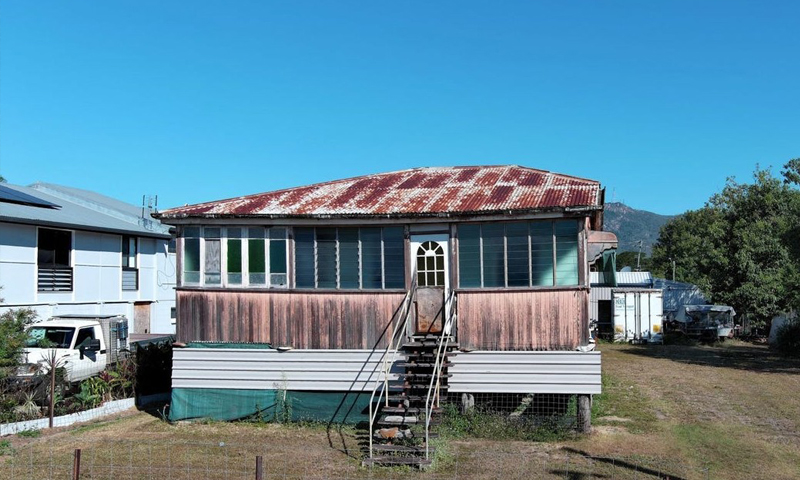
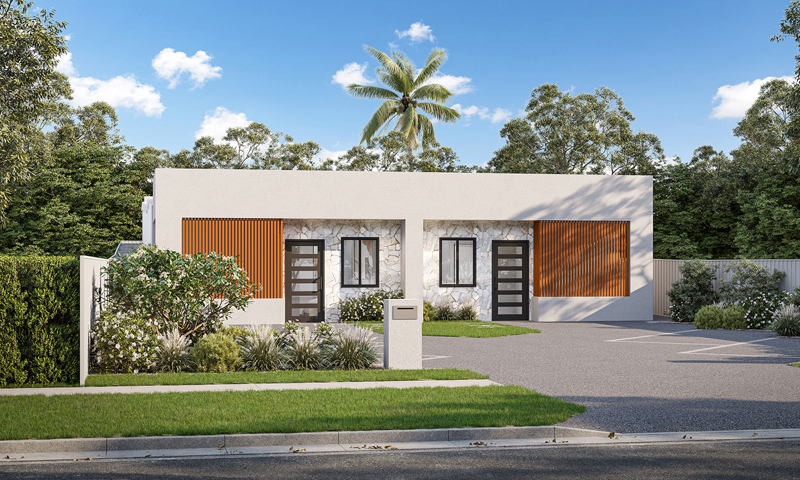
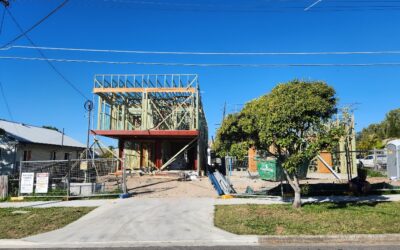
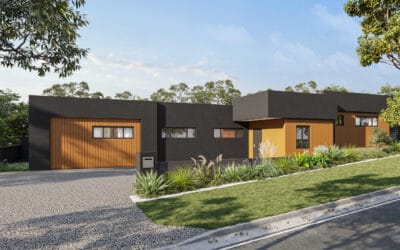
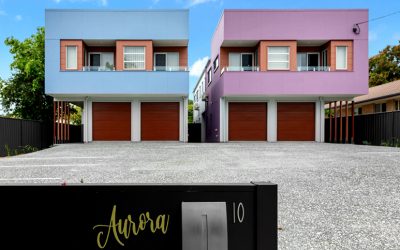
(Above) Before and after. One of our Townsville development projects for two low set, side-by-side rooming houses
How Much Cash Does the Investor Need?
One of the biggest misconceptions about property development is that investors need millions of dollars to undertake a development.
They don’t.
In this example, the investor contributes approximately $665,056 of their own funds.
Those funds cover the land purchase together with the costs required to take the project through to the commencement of the development loan, which funds the remainder of the project – Council costs, consultant and contractor costs, drawings and approvals (soft costs), plan sealing, new titles, construction, furnishings etc., all the way to property management, which we also take care of, making the journey easy for the rooming house development investor.
Investor’s Initial Cash Contribution
| Item | Amount |
|---|---|
| Land Purchase | $600,000 |
| Stamp Duty | Included in Total Investor Contribution |
| Finance Broker Fee | Included in Total Investor Contribution |
| Development Management Fees | Included in Total Investor Contribution |
| Property Search & Negotiation | Included in Total Investor Contribution |
| Valuation Fees | Included in Total Investor Contribution |
| Total Investor Contribution | $665,056.50 |
Notice something important.
The investor isn’t funding the entire development.
They’re investing only the equity required to secure the site and commence the project. Everything else is funded through specialist development finance.
That is where leverage becomes a powerful wealth creation tool.
How Development Finance Works
Unlike a standard residential home loan, rooming accommodation developments are typically funded by specialist private development lenders.
These lenders understand:
- rooming accommodation
- subdivision
- construction
- development approvals
- commercial valuations
- development exit strategies.
Rather than advancing the entire loan upfront, funds are released progressively as construction advances.
This is known as progressive drawdowns.
In our Townsville example, the project is funded using a private development facility of approximately $2.39 million.
Development Finance
| Item | Amount |
|---|---|
| Development Loan | $2,385,375 |
| Interest Rate | 10.5% p.a. |
| Drawdowns | 13 |
| Drawdown Fee | $900 + GST each |
Instead of borrowing the full amount on day one, money is drawn only when required.
As a result, interest is charged only on the amount actually borrowed at each development and construction stage – which is capitalized, meaning you do not need to service the loan during the development.
Capitalised interest Improves Cash Flow
One of the major advantages of development finance is capitalised interest.
Instead of making monthly loan repayments during construction, interest is added to the loan balance. The investor therefore avoids funding monthly interest repayments.
These costs are generally repaid when the completed development is refinanced or sold. This allows investors to focus on completing the development rather than servicing debt during construction.
Estimated Finance Costs
Based on the current feasibility and drawdown schedule, total finance costs are estimated as follows.
| Finance Cost | Amount |
|---|---|
| Estimated Capitalised Interest | $125,232 |
| Drawdown Fees | $12,870 |
| Total Finance Costs | $138,102 |
While many investors focus only on the interest rate, experienced developers look at the bigger picture.
Would you rather pay around $138,000 in finance costs to create more than $1 million in additional equity?
Professional developers understand that the cost of finance should always be measured against the wealth it helps create.
Rental Income
Each rooming house contains six large, fully furnished studio-style rooms designed for professionals and key workers.
Assuming an average rent of $550 per room per week (plus lock up garaging/parking), the completed development produces the following income.
Annual Rental Income
| Item | Amount |
|---|---|
| Gross Rental Income Per House | $176,280 |
| Gross Rental Income (2 Houses) | $352,560 |
| Net Rental Income (after annual operating costs) | $311,445 |
This is where Cash-on-Cash Return becomes so powerful.
Remember…
The investor hasn’t invested $2.7 million.
They’ve invested approximately $665,000.
Calculating the Rental Cash-on-Cash Return
Cash-on-Cash Return measures the annual income generated from the investor’s own capital.
Gross Rental Return
| Calculation | Result |
|---|---|
| $352,560 ÷ $665,056 | 53.0% |
Gross Rental Cash-on-Cash Return: 53.0% per annum
Net Rental Return
| Calculation | Result |
|---|---|
| $311,445 ÷ $665,056 | 46.8% |
Net Rental Cash-on-Cash Return: 46.8% per annum
In simple terms, the completed development generates annual rental income equivalent to almost half of the investor’s original cash contribution every year.
That is an extraordinary result compared with most traditional residential investment strategies.
However, the rental income is only one half of the equation. The real magic happens during the development itself.
Subdivision, planning approvals and construction don’t just produce rental income—they also manufacture equity.
In the next section, we’ll examine how this Townsville project is projected to create over $1 million in additional equity. Additionally, it would produce an estimated 162.6% Development Cash-on-Cash Return before investor benefits from capital growth.
Manufactured Equity – Where Property Developers Really Create Wealth
Rental income is only one part of the equation.
The real wealth created through property development comes from something many investors have never even consider – manufactured equity.
Most traditional property investors purchase an investment property and then wait. They wait for the market to increase its value.
That might take five years. It might take ten. Sometimes even longer. At the time of writing this post in August 2026, due to the Australian government’s changes to negative gearing and Capital Gains Tax, property values have fallen, in some areas by 10%. This is a deliberate government policy designed to make housing cheaper for first home buyer (while worsening investment house values for investors).
Developers and development investors aren’t driven by market movements – they create their own value. Rather than waiting for property prices to rise, they generate equity through the development process itself. Every stage of a well-executed development has the potential to increase the property’s value, regardless of broader market conditions.
For example:
- purchasing the property well
- subdividing the land
- obtaining development approval
- constructing higher-value improvements
- increasing rental income
- improving valuation outcomes
Instead of hoping the market eventually creates equity, the developer manufactures it.
That manufactured equity can then be leveraged into the next project, allowing wealth to compound much faster than relying solely on natural capital growth.
This is one of the biggest differences between being a property investor and becoming a property developer – or investing in property development, where the investor becomes the ‘armchair developer’.
What Is Manufactured Equity?
Manufactured equity is simply the difference between:
The completed value of the development
less
The total cost of creating it.
In our Townsville example, the completed development consists of two purpose-built rooming houses, each generating strong rental income and consequently attracting significantly higher valuations than the original property.
Completed Development Value
| Item | Amount |
|---|---|
| Rooming House 1 | $1,900,000 |
| Rooming House 2 | $1,900,000 |
| Gross Realised Value (GRV) | $3,800,000 |
The completed development is therefore estimated to have a total market value of approximately $3.8 million.
(Note: The Gross Realized Value is based on a 9% capitalization rate for our Townsville rooming houses adopted by Queensland’s leading rooming accommodation valuer.)
Total Development Cost
These typically include:
Every development incurs a range of costs beyond simply purchasing land and constructing buildings.
- subdivision
- civil works
- consultants
- development approvals
- infrastructure charges
- construction
- furnishings
- landscaping
- finance
- leasing
- project management
When these costs are combined, together with estimated finance costs during construction, the total project investment is approximately $2.72 million.
Total Project Cost
| Item | Amount |
|---|---|
| Total Development Cost (including estimated finance costs) | Approximately $2,718,000 |
Manufactured Equity
Manufactured equity is calculated by subtracting the total project cost from the completed value of the development.
Manufactured Equity Calculation
| Item | Amount |
|---|---|
| Gross Realised Value | $3,800,000 |
| Less Total Project Cost | ($2,718,000) |
| Manufactured Equity | Approximately $1,082,000 |
That means the development has created more than one million dollars in additional equity before the investor receives a single dollar of future capital growth.
Think about that for a moment. The property market didn’t create that uplift in equity.
The development process created it.
Calculating the Development Cash-on-Cash Return
Now let’s compare the manufactured equity with the investor’s original cash contribution.
Remember, the investor contributed approximately $665,056 of their own funds. Everything else was funded through specialist development finance.
Development Cash-on-Cash Return
| Item | Amount |
|---|---|
| Investor Cash Contribution | $665,056 |
| Manufactured Equity | $1,082,000 |
Calculation
| Formula | Result |
|---|---|
| $1,082,000 ÷ $665,056 | 162.6% |
Development Cash-on-Cash Return = 162.6%
In simple terms, for every $1 the investor contributes, approximately $1.63 of additional equity is created through the development process.
That is before taking into account future capital growth, rental increases or loan reduction over time.
Rental Income Plus Manufactured Equity
When investors first discover Cash-on-Cash Returns, many focus only on the rental income.
Experienced developers look at the bigger picture. The development creates two forms of wealth simultaneously.
Firstly, it produces approximately $311,445 in annual net rental income.
Secondly, it creates approximately $1.08 million in manufactured equity.
Combined, those two outcomes represent an exceptional return on the investor’s original capital.
Overall Wealth Creation
| Measure | Amount |
|---|---|
| Annual Gross Rental Income | $352,560 |
| Annual Net Rental Income | $311,445 |
| Manufactured Equity | $1,082,000 |
| Gross Rental Cash-on-Cash Return | 53.0% |
| Net Rental Cash-on-Cash Return | 46.8% |
| Development Cash-on-Cash Return | 162.6% |
This is why experienced property developers rarely judge a project solely on rental yield.
They assess three questions:
- Will it generate strong recurring income?
- Will it manufacture substantial equity?
- Can that newly created equity be leveraged into the next development?
If the answer to all three questions is “yes”, the development has the potential to accelerate wealth creation far more rapidly than simply purchasing another investment property and waiting for the market to do the work.
Why the Dual Development Strategy Produces Superior Returns
Many investors ask us a simple question.
“Why wouldn’t I just buy a block of land and build one rooming house?”
It’s a perfectly reasonable question.
For many investors, building a single five or six-room rooming house is an excellent investment strategy. It can generate strong rental income, long-term capital growth and an attractive Cash-on-Cash Return.
However, if your objective is to accelerate wealth creation, a dual rooming accommodation development can produce substantially greater returns.
The reason is simple.
A single rooming house primarily generates cash flow.
A dual rooming house development generates cash flow and manufactured equity.
That distinction changes everything.
The Traditional Investment Strategy
A typical investor purchases a vacant lot, constructs one six-room rooming house and holds it for the long term.
The strategy is relatively straightforward.
The investor contributes the land purchase, stamp duty and furnishings, while construction is funded through a conventional construction loan.
Assume the following example.
Single Six-Room Rooming House
| Item | Amount |
|---|---|
| Land Purchase | $400,000 |
| Stamp Duty | $13,000 |
| Furnishings (6 Rooms) | $40,260 |
| Construction Loan | $700,000 |
| Total Project Cost | $1,153,260 |
The investor contributes approximately:
Investor’s Cash Contribution
| Item | Amount |
|---|---|
| Land Purchase | $400,000 |
| Stamp Duty | $13,000 |
| Furnishings | $40,260 |
| Total Investor Equity | $453,260 |
Rental Performance
Assuming each of the six rooms rents for an average of $550 per week (plus lock up garages and car parking) and the completed rooming house produces:
Annual Rental Income
| Item | Amount |
|---|---|
| Gross Rental Income | $176,280 |
| Net Operating Income (before interest) | $155,723 |
Assuming the construction loan converts to a long-term investment loan of $700,000 at an interest rate of 7%, annual interest would be approximately:
| Finance | Amount |
|---|---|
| Loan | $700,000 |
| Interest Rate | 7.0% |
| Annual Interest | $49,000 |
Leaving annual cash flow of approximately:
| Cash Flow | Amount |
|---|---|
| Net Operating Income | $155,723 |
| Less Interest | ($49,000) |
| Annual Cash Flow | $106,723 |
Single Rooming House Cash-on-Cash Return
Cash-on-Cash Return measures the annual cash flow generated from the investor’s own capital.
Formula
Annual Cash Flow ÷ Investor Equity × 100
Calculation
| Calculation | Result |
|---|---|
| $106,723 ÷ $453,260 | 23.6% |
Cash-on-Cash Return = 23.6% per annum
This means the completed rooming house generates annual cash flow equivalent to almost one quarter of the investor’s original cash contribution every year.
Compared with many traditional residential investment properties, this is an excellent return.
However…let’s compare it with the development strategy.
The Double Rooming House Development Strategy
Instead of constructing one rooming house, the investor purchases a larger development site, subdivides it into two lots and constructs two purpose-built six-room rooming houses.
The investor contributes approximately $665,056 of their own capital.
The balance of the project—approximately $2.39 million—is funded through specialist private development finance using progressive drawdowns throughout construction.
The completed development delivers the following outcomes.
Dual Rooming House Development
| Measure | Amount |
|---|---|
| Investor Cash Contribution | $665,056 |
| Development Finance | $2,385,375 |
| Gross Rental Income | $352,560 |
| Net Operating Income | $311,445 |
| Manufactured Equity | Approximately $1,081,574 |
| Gross Rental Cash-on-Cash Return | 53.0% |
| Net Rental Cash-on-Cash Return | 46.8% |
| Development Cash-on-Cash Return | 162.6% |
Notice something important.
The investor hasn’t simply doubled the rental income. They have fundamentally changed the economics of the investment.
Subdivision has created additional land value. Construction has created additional property value.
Higher rental income has increased the completed valuation.
Together, these factors create more than $1 million in manufactured equity before future capital growth is even considered.
Side-by-Side Comparison
The difference becomes immediately apparent when the two strategies are compared.
| Measure | Single 6-Room House | Dual Development |
|---|---|---|
| Investor Cash Contribution | $453,260 | $665,056 |
| Total Project Cost | $1,153,260 | ~$2,718,426 |
| Gross Rental Income | $176,280 | $352,560 |
| Net Operating Income | $155,723 | $311,445 |
| Annual Interest During Construction | Conventional Loan | Capitalised Development Finance |
| Annual Cash Flow | $106,723 | $311,445* |
| Rental Cash-on-Cash Return | 23.6% | 46.8% |
| Manufactured Equity | Minimal | ~$1,081,574 |
| Development Cash-on-Cash Return | Minimal | 162.6% |
Why Developers Focus on Return on Equity—Not Just Interest Rates
One of the first questions many new investors ask is:
“Why would I pay 10.5% interest to a private development lender?”
Experienced developers ask a completely different question.
“How much additional wealth will that finance help me create?”
That is a very different mindset.
The objective isn’t to secure the cheapest loan.
The objective is to maximize the return on your own capital.
If specialist development finance enables an investor to contribute approximately $665,000 while controlling a development worth almost $2.72 million, producing annual net rental income of more than $311,000 and creating approximately $1.08 million in manufactured equity, then the cost of finance becomes just one component of a much larger wealth creation strategy.
Professional developers understand that money is simply a tool.
When used strategically, borrowed money allows investors to control larger assets, create greater value and significantly accelerate wealth creation.
Creating Wealth Instead of Waiting for It
This is perhaps the biggest lesson property development teaches.
Traditional investing relies heavily on time.
Developers rely on value creation.
Rather than waiting ten or twenty years for the market to increase the value of a property, developers create equity through intelligent site selection, subdivision, planning approvals, construction and specialist development expertise.
That is why experienced developers often build wealth in years rather than decades.
It is also why Cash-on-Cash Return remains one of the most powerful measures available to investors.
It doesn’t simply measure how much property you own. It measures how effectively your own capital is working for you.
And when combined with manufactured equity, it demonstrates why well-executed property developments can deliver substantially greater returns than traditional buy-and-hold investment strategies.
Important: The figures used in this article are based on a development example designed to demonstrate the principles of cash-on-cash return and manufactured equity. Individual project outcomes will vary depending on site characteristics, finance structure, market conditions, occupancy levels, construction costs and management arrangements. However, the principles and strategy are the same for all our projects delivering the highest possible returns.
Disclaimer
The information contained in this article is provided for general information purposes only and should not be relied upon as financial, investment, taxation, legal or lending advice.
WhiletThe figures, calculations and examples used throughout this article are real, they are illustrative to demonstrate a rooming accommodation development scenario in Townsville, Queensland. Actual project costs, development approval requirements, infrastructure charges, construction costs, finance costs, rental income, operating expenses, valuations, market conditions and investment returns may vary from those presented.
Cash-on-cash returns, development profits, manufactured equity outcomes and rental yields are estimates only and are not guaranteed. Past performance is not a reliable indicator of future performance. Property values may rise or fall, rental income may vary, and unforeseen costs or delays may impact project outcomes.
Development finance terms, interest rates, loan-to-value ratios (LVRs), lender requirements and funding availability are subject to change and may vary between lenders and borrowers. Not all lenders fund rooming accommodation developments. Contact us for your rooming accommodation development lender.
Readers should undertake their own independent due diligence before making any investment or development decisions.
Investors should independently assess whether any development, finance structure or property investment strategy is suitable for their individual circumstances, objectives and risk profile.
Neither the author nor publisher accepts any liability for any loss, damage or expense arising directly or indirectly from reliance on the information contained in this article.
About the author:
Paul Zanetti is the Founder and Director of Brisbane Rooming Houses Pty Ltd, a developer, builder and property manager of rooming accommodation and has been the leading proponent in Queensland for a new type of rooming houses – ‘Executive Living’ designer studios for key workers.
Paul is also a prominent and active advocate for reform of Queensland’s regulatory framework governing rooming accommodation and affordable housing.
He has prepared and published reports for Queensland State and local governments identifying regulatory, planning and infrastructure-charging anomalies affecting rooming accommodation in Queensland. His advocacy has included engagement and meetings with State Planning Ministers, senior departmental officers and Directors-General, as well as local government elected representatives, planning officials and other relevant stakeholders.
Paul continues to advocate for evidence-based planning reform and the development of proportionate regulatory frameworks capable of supporting the delivery of affordable housing by the private sector.
Paul can be contacted at: paul@brisbaneroominghouses.com.au